
For most people, calligraphy is initially about the pretty letters, but they soon realize that there is much more to it than meets the eye. It isn’t just your handwriting and it’s more than the end result; in the same vein that it isn’t really just an art it can also teach you the values of patience and concentration.
The art of calligraphy can never match up against today’s quick, easy and digital forms of communication. It demands that you take your time, slow down, and pay close attention to the little details. That’s exactly why I see calligraphy as both an art form and a discipline in and of itself that encourages patience and concentration.
Every stroke needs care
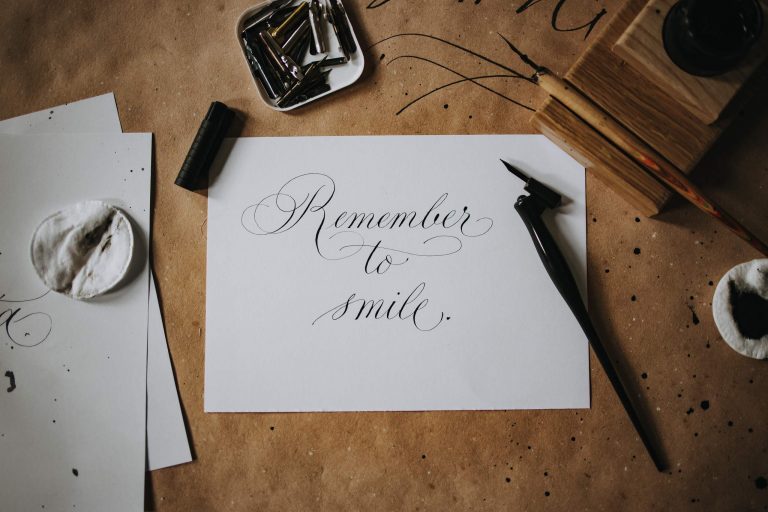
You don’t need to worry too much about making mistakes when you write with a pen on paper; you just get over with what you need to express and move on. Calligraphy works differently, with every single movement you make having an effect on the end piece. That means you need to keep an eye out for the amount of pressure you exert, where you point the nib at any given time, how wide the spaces between letters and words are, and even the tempo of your movements.
Because there is so much to take in, calligraphy is in itself training you to become better at noticing things that you might not have previously considered, and in turn, it helps you learn how to do things a little bit better.
Patience makes things better
Calligraphy is all about slowing down. Unlike other methods of writing, it is not meant to be done fast as you may have noticed, but rather, done slowly and with control. The calmer your movements are, the better they will be.
At first it can feel like it takes a lot longer than you would want it to, but as you go on you learn just how much you enjoy it; that slow process is one of the things that gives you that much more control.
Repetition develops discipline
Repetition is what will lead you to your goal. If you repeat a simple movement over and over then the chances are you will eventually perfect it. From the outside you might think it seems like an extremely mindless thing to do, especially for long periods of time, but if you keep at it then eventually you will learn how to control your pen.
This type of discipline and dedication is what will lead you to your goal. Not only that, but by practicing the same movement over and over again you learn a lot about your mindset. It makes you more patient and teaches you how to keep your mind focused on your task, skills which are useful in other aspects of your life.
Mistakes will just be part of the process
Another valuable skill that calligraphy can teach you is learning to just accept what is. It just so happens that you can’t always do things perfectly, and sometimes things just won’t work as expected or will turn out slightly off. There is a good chance ink will get a bit more on the page than you want it to or a couple of letters might end up looking like the other isn’t. You learn to not just get angry or upset, but to take a step back, see where exactly you went wrong and adjust your method. This in turn is a better way of viewing learning and improvement overall.
There is room for creativity, though
You are learning how to be more disciplined in a more creative way. When things become steady and stable for you then you have more options and freedom. You then have the opportunity to try new things and see what you can come up with.
This ability to balance discipline and creativity is what sets calligraphy apart from other forms of art.
The Bottom Line
To me the main benefit to calligraphy is that in addition to being pretty, calligraphy is also just good for you to practice and learn from. It requires focus, attention to detail, discipline, patience and a good balance of creativity and control. The more and more you practice it, you realize that the process of practicing is the same as important as the work you produce when you’re done.